From the Trades to Franchise Owner: Making the Jump
September 2, 2026
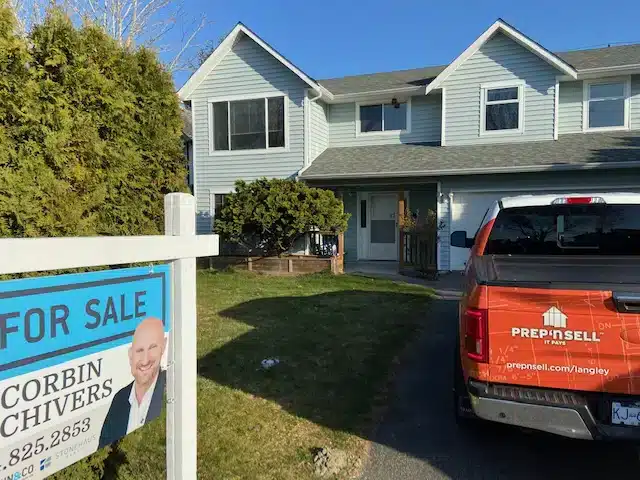
The 8-Second Test: What Buyers Notice Before They Reach the Kitchen
A surprising amount of a buyer’s opinion is formed before they have taken their shoes off.
Ask any Realtor and they will tell you the same thing. They can usually predict how a showing will go before the buyer has walked past the front hall. When selling a home, first impressions begin at the curb and carry through the front door, often before a buyer has seen the kitchen, the bedrooms, or anything you spent real money on.
We call it the 8-Second Test: the short stretch from the front walk to the entryway in which a buyer has already decided whether a home feels clean, maintained, and worth exploring properly. First impressions when selling a home are largely settled in that window, and nothing in it is expensive to fix, which is what makes it the cheapest advantage a seller has.
This is not about buyers being shallow. It is how people process unfamiliar spaces. A house that feels cared for gets the benefit of the doubt on its flaws. A house that feels neglected has every flaw counted twice.
The Approach: First Impressions Start at the Curb
Buyers actually get two first impressions, and most sellers only prepare for one. There is the listing photography online, and there is the moment they pull up outside. The goal is consistency between them. If a property looks brighter, cleaner and better kept in the photos than it does at the curb, buyers register the disconnect immediately, and they carry that suspicion through every room.
The most common approach-stage problems are also the least expensive. Weeds through the driveway. A garbage bin left out front. Cobwebs across the porch light. Faded house numbers. Individually, none of these is likely to make or break a sale. Together they suggest nobody has been paying attention, and that thought is very hard to unthink once a buyer has had it.
The first eight seconds, in order
- The walkway and front step — swept, clear, nothing to step around.
- The front door itself — clean and easy to open, with working hardware and no peeling or badly scuffed paint.
- Exterior and entry lighting — clean fixtures and a bright entry, which matters enormously for anyone viewing after work.
- The smell in the entry — the fastest and most permanent judgement a buyer makes.
- Light levels inside — a dim hall reads as small and dated even when it is neither.
- What is on the floor — shoes, bags and coats shrink an entryway dramatically.
The Threshold Moment
There is a specific pause when someone steps inside and takes their first breath. Smells register faster than anything visual. It is almost impossible to disguise, and homeowners are often the last people able to detect it in their own house because they stopped noticing years ago.
Pets, cooking, damp, smoke, and simply a house that has been closed up all summer each leave a signature. Air freshener does not solve it and often makes it worse, because it reads as something being covered up. Proper ozone odour treatments, a deep clean of soft surfaces, and genuine ventilation are what actually work.

Why the Entry Punches Above Its Weight
Entryways are usually the smallest room in the house and the most overloaded. Coats, shoes, bags, mail, keys and whatever came in from the car all land there. To a buyer, a crowded entry does not read as “busy family.” It reads as “not enough storage,” and that thought follows them into every closet they open for the rest of the visit.
Clearing it almost entirely is one of the highest-return half-hours in home prep. Coats down to two or three. Shoes away completely. Nothing on the floor. It will feel oddly empty to you and correctly spacious to everyone else.

1 Call Does It All
Cleaning, decluttering, junk removal, handyman repairs, painting, landscaping and curb appeal — coordinated by one team against your listing date, so the first impression is handled before the photographer arrives.
The Small Repairs Buyers Read as Big
A door that sticks. A handle that turns loosely. A light switch that does nothing. A tap that drips. None of these are expensive and none of them are structural, but buyers use them as evidence. The reasoning is quick and largely unconscious: if the visible small things were not maintained, what about the things I cannot see?
Fixing a dozen of these usually takes a handyman half a day. It is the single most cost-effective work in a pre-listing budget, and far more valuable than most sellers expect.
Worth fixing before the first showing
- Anything that sticks, drips or squeaks — doors, taps, hinges, windows.
- Every dead bulb, and match the colour temperature across a room.
- Loose handles and plates on doors, cupboards and switches.
- Visible caulking and grout in bathrooms and around sinks.
- Scuffed paint at door frames and high-traffic corners.
Try the 8-Second Test Yourself
Leave the house for ten minutes, then come back and approach it as though you have never seen it before. Walk up the path at normal speed. Open the front door. Stand in the entry and breathe.
Do not look for renovations. Look for friction: something dirty, something broken, something crowded, something dark, or something that smells off. Whatever you notice in those first few seconds is almost certainly what a buyer notices too, and it is nearly always cheaper to fix than you expect.
Getting Your Home Ready Before the Listing Photos
The order matters. Listing photos are taken once and then represent your home to every buyer who searches online, so all of this work needs to happen before the photographer, not after the first weekend of showings.
That is usually the hard part. It is not that the tasks are difficult, it is that there are twenty of them across five trades and a date that will not move. Which is exactly the problem we exist to solve.
For Realtors, spotting these details during the pre-listing walkthrough also makes the seller conversation considerably easier. Instead of raising a renovation nobody wants to fund, you can point at the handful of visible, inexpensive things most likely to shape a buyer’s first impression, and hand the coordination to someone else.
Get the first impression handled properly
Prep’n Sell coordinates the cleaning, decluttering, repairs, painting and curb appeal that shape a buyer’s first impression — all on one schedule, before your listing photos are taken.
- One point of contact instead of five separate trades to chase.
- Work sequenced to your listing date, not whenever someone is free.
- As much or as little as you need, from a deep clean to a full pre-sale makeover.
See what is included in getting a home market ready, or explore curb appeal services.
Make the first eight seconds count.
Get Your Home Market Ready